Recovering plastic from the river to return it to the circular economy
Recovering plastic from the river to return it to the circular economy
Every pound of plastic trapped in the river is one pound less in the ocean — and one more opportunity to turn pollution into real solutions.
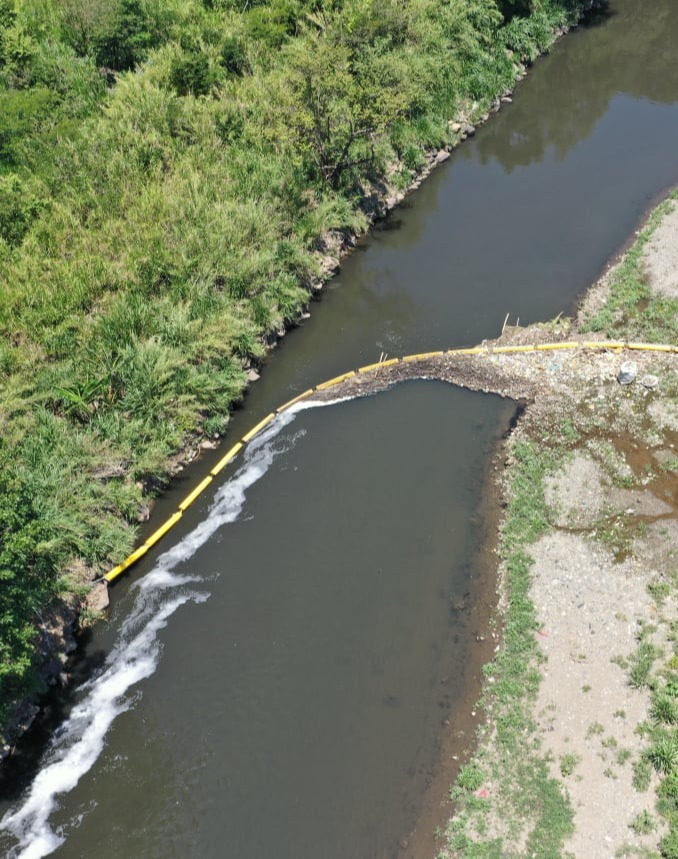
The collection fence of the Virilla River is part of the national Landscapes without Plastic program and is strategically located about 300 meters from the RESIN8™ Plant, in Belén.
Its location is no coincidence. The fence is located downstream from the junction of the Tiribí River and the Torres River with the Virilla, in one of the most important natural discharge points of the Greater Metropolitan Area. This confluence makes the site a critical corridor through which a large part of the waste dragged from urban areas, sewers, drains and streams flows.
The Virilla is also one of the most polluted rivers in the country, so intercepting plastic at this point represents a key opportunity to trap upstream waste is much more effective, less expensive and environmentally more efficient than trying to recover it once it reaches the sea, where it is dispersed, fragmented into microplastics and its collection becomes technically complex and economically unfeasible.
It is a floating barrier installed diagonally over the riverbed, designed to take advantage of the natural force of the water and direct floating waste to the shore, where it can be safely removed.
Among its main features:
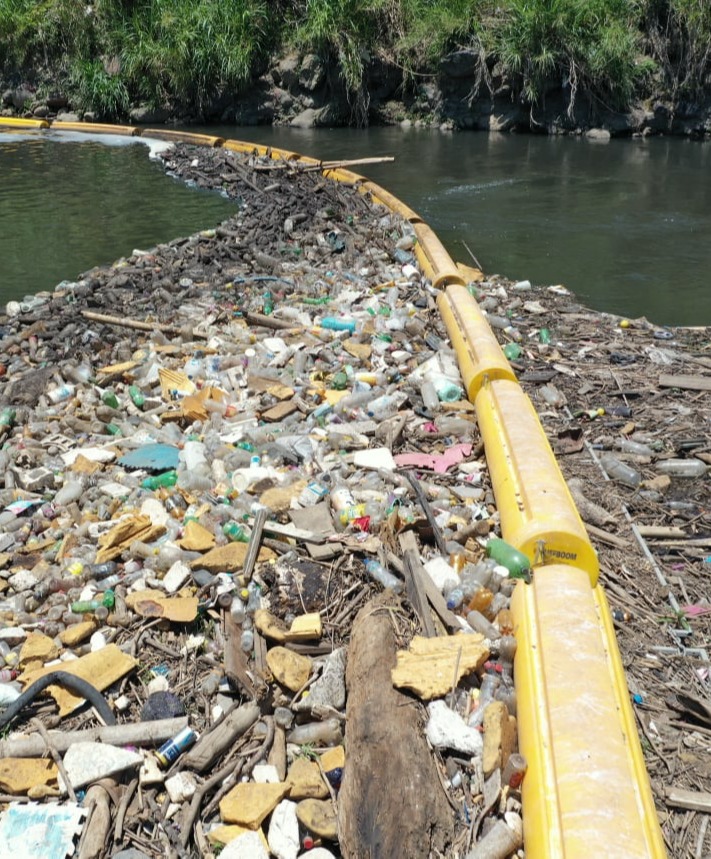
Since its installation, this infrastructure has made it possible to recover more than 4 tons of tragic plastic, preventing this waste from continuing its journey to the Pacific Ocean and demonstrating how a local solution can generate real environmental impact.
Tragic plastic is plastic waste that, in addition to visually polluting the environment, damages ecosystems, affects wildlife and ends up entering the human food chain in the form of microplastics, becoming a direct public health and environmental problem.
The fence is managed by PEDREGAL and CRDC Materials, as part of an articulated effort that seeks not only to remove plastic from the environment, but to transform it into RESIN8™ synthetic sand to reincorporate it as a raw material in construction, thus closing the cycle under a circular economy model.
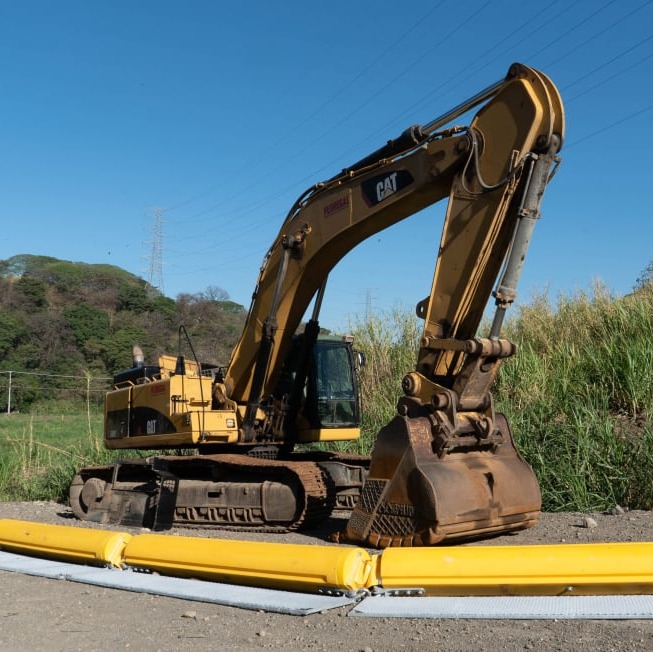
During the first year, marked by a dry season, the harvest was mainly carried out by RESIN8™ personnel. From the second year onwards, the increase in waste forced the implementation of a more robust operation, incorporating machinery and creating a permanent volunteer program.
Today, companies, universities and communities actively participate in conferences that include:
• Educational talk on the problem of plastic.
• Direct separation of waste at the fence site.
• Visit the plant to learn how this plastic is transformed into RESIN8™.
This experience connects people to the reality of the problem and, at the same time, to the solution, showing in a tangible way how their actions can be turned into useful materials for construction.